
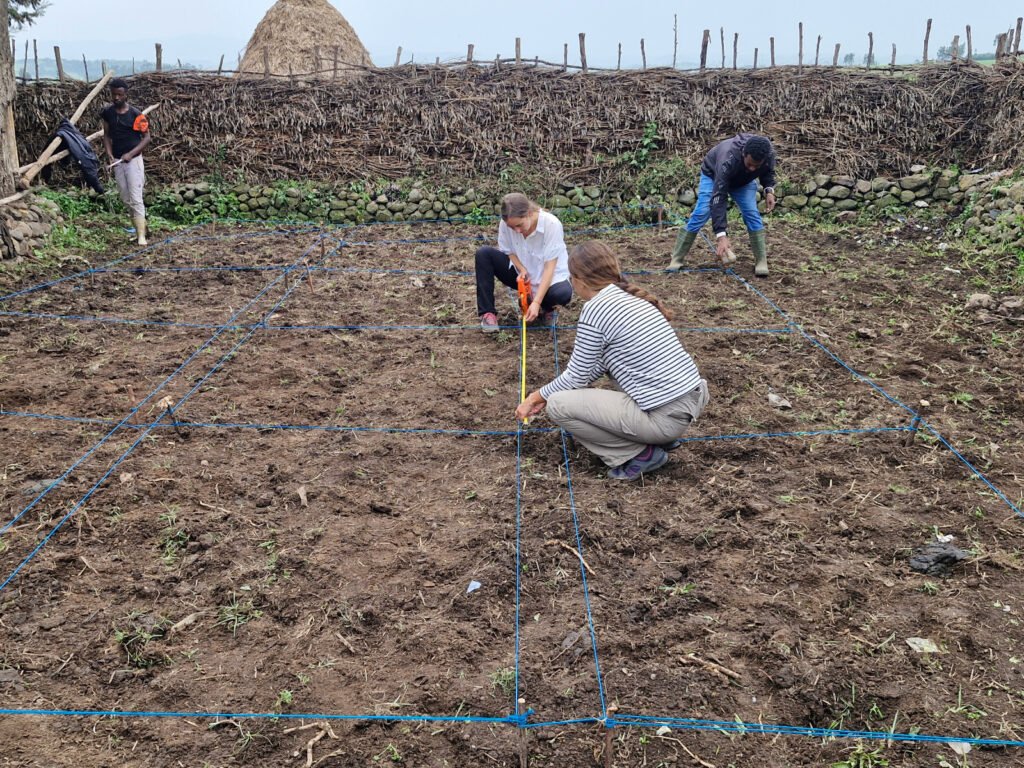
From September 12 to 18, we welcomed Dr. Beatriz Ramos Solano and María Valero Gil to Ethiopia. Both are from the Plant-Microbiome Interaction Biotechnology Group at CEU San Pablo University.
Their visit marks a key moment in our project “Using Rhizobacteria (PGPR) to Improve Food Security in Gimbichu, Ethiopia,” which we are carrying out with support from the “la Caixa” Foundation under its 2025 International Cooperation Call.
From Spain to the plots of Gimbichu
Over the past few months, the CEU team has been working in Spain with beneficial bacteria that can boost the growth of crops such as chickpeas and lentils.
After studying 20 strains and selecting six, part of that work has now made it to Gimbichu.
One of the selected bacteria traveled to Ethiopia freeze-dried and, once here, was reactivated and grown in the laboratories of the Bio and Emerging Technology Institute (BETin).
Meanwhile, our team has prepared two experimental plots in Gimbichu, one of chickpeas and one of lentils, divided into 30 subplots.
There we will compare five treatments: three beneficial bacteria (one from Spain and two from Ethiopia) and two controls, each repeated three times.
Bacteria-coated seeds
The process starts even before sowing.
The seeds are coated with a thin layer that contains the beneficial bacteria. When they come into contact with moist soil and begin to germinate, the microorganisms colonize their roots.
From there, we want to see whether this relationship helps the plants make better use of soil nutrients, grow stronger and cope better with conditions such as drought or certain diseases.
Over the coming months, we will follow their progress closely and compare the results of each treatment.
Learning by watching things grow
But the project doesn’t stop at the plots.
During this visit, we also worked with farmers in Gimbichu, both men and women, to explain in simple terms what biofertilizers are and how they can be used.
In addition, 12 women from the community will take part in a hands-on activity with chickpea plants treated in three different ways: with water only, with bacteria grown in a liquid medium, and with bacteria prepared as a powder to dissolve in water.
The idea is very simple: to see the differences between the plants with their own eyes.
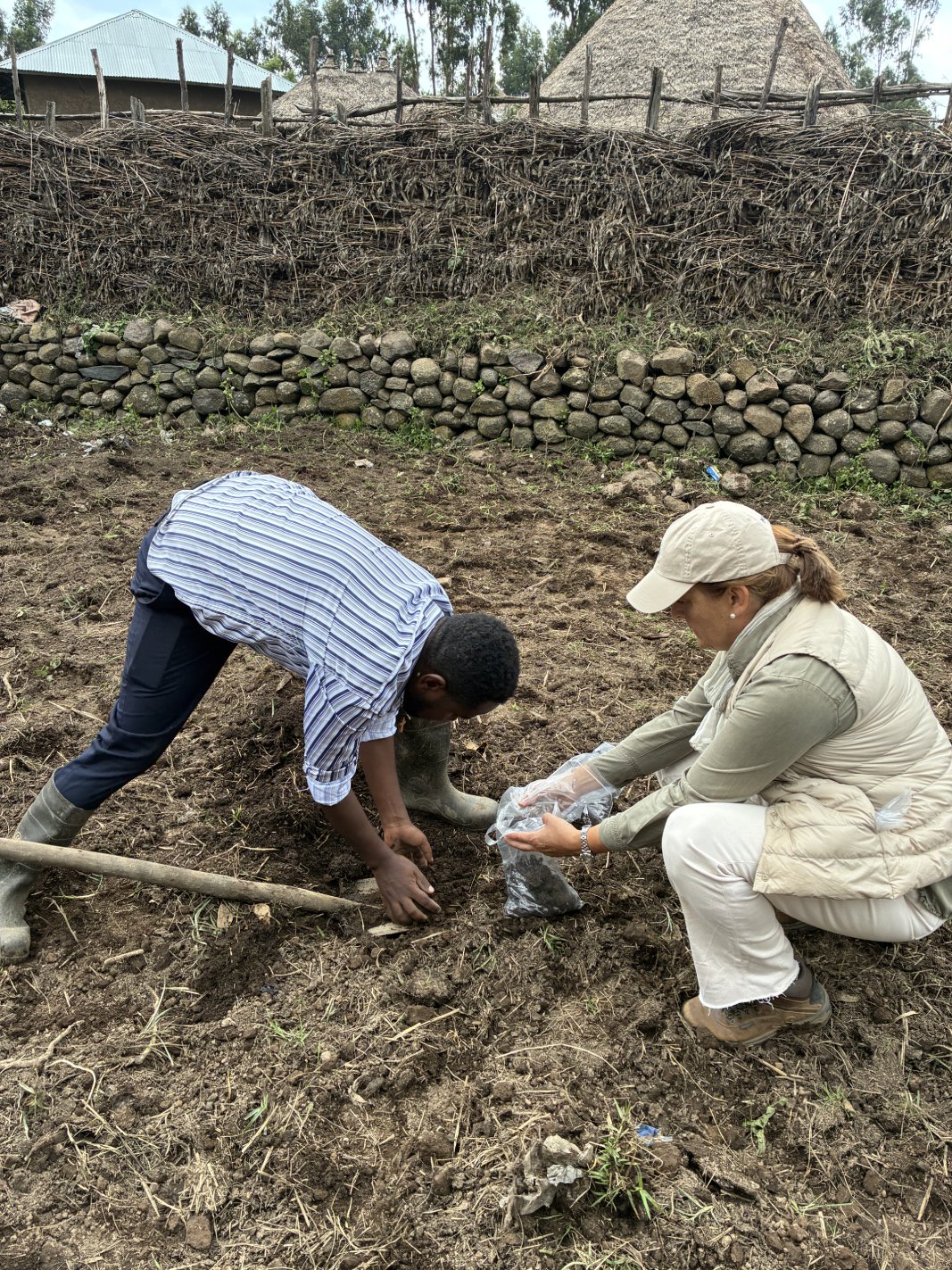
The most important thing is that this knowledge doesn’t stay in the lab. Technology transfer is about making sure research reaches society and, in this case, the farming families of Gimbichu.
María Valero Gil
Science at the service of the community
Through this project, we work with some 85 farming families in Gimbichu, 640 people in total, 328 of them women. Our goal is to improve the productivity and resilience of their crops, reduce dependence on chemical inputs and strengthen the community’s capacities.
This project is possible thanks to the scientific involvement of CEU San Pablo University and BETin, and the support of the “la Caixa” Foundation.
We keep working so that research reaches the field and turns into practical solutions for the families of Gimbichu: hardier crops, healthier soils and more sustainable farming.